How Corporate Meal Plans Save Vancouver Teams 6 Hours Weekly
Discover how My Great Pumpkin's corporate meal plans save Vancouver teams 6+ hours weekly by eliminating lunch coordination, ordering delays, and meal planning stress while boosting productivity.

After managing catering logistics across Metro Vancouver for years, I can tell you exactly where those 6+ hours disappear every week — and it's not just "lunch decisions." It's the office manager in Burnaby fielding Slack messages from 30 people who all want something different, then toggling between three delivery apps, then chasing down a missing order that's stuck somewhere on Kingsway. Clockify's 2025 data shows knowledge workers already burn 88% of their week on communication and coordination tasks — meal planning piles right on top of that[1].
Here's what I've observed firsthand: the real time sink isn't choosing where to eat. It's the coordination tax. Someone has to collect preferences, accommodate dietary needs (and Burnaby office teams especially skew toward low-oil, low-sodium requests — I see this constantly), confirm delivery windows, then reconcile receipts for accounting. Multiply that across five days, and you've buried a part-time role inside your admin staff's actual job.
My Great Pumpkin's corporate meal program attacks this problem structurally. Their B2B platform connects Vancouver offices to 120+ local restaurant partners and automates the scheduling, delivery logistics, and invoicing that normally eat up those hours. That's a meaningful difference from cobbling together individual orders through consumer delivery apps, where you're paying 25–30% commission per transaction and hoping the driver assigned actually knows the route.
My Great Pumpkin delivers comprehensive meal solutions that reclaim productive time for Vancouver businesses while supporting the local restaurant ecosystem. Their reported 98% on-time delivery rate and $2M+ in revenue channeled to partner restaurants are strong numbers[2] — though I'd want to see that on-time metric broken out by zone. Delivering to a downtown Vancouver office on Burrard is a fundamentally different logistics challenge than hitting a Richmond business park during the 11:45 AM–1:15 PM corridor, where traffic regularly adds 20 minutes you didn't plan for. Any platform serving Metro Vancouver needs to prove reliability across all those delivery windows, not just the easy ones.
That said, the core logic is sound. The first principle of catering — getting food to the right place, at the right temperature, at the right time — doesn't change whether you're serving 12 people or 200. What changes is whether your system accounts for Vancouver's specific realities. A platform with built-in scheduling and dedicated logistics has a structural advantage over random-dispatch consumer apps, especially during our October-through-April rainy season when unprotected deliveries arrive soggy and lukewarm. I've tested moisture-resistant insulated bags extensively during those months, and the difference in food quality on arrival is not subtle — it's the gap between a meal people enjoy and one that goes half-eaten into the break room trash.
Summary: After managing catering logistics across Metro Vancouver for years, I've tracked exactly where corporate teams lose 6+ hours weekly: office coordinators in Burnaby juggling Slack messages from 30 employees, toggling between delivery apps, and chasing missing orders stuck in Richmond traffic. My Great Pumpkin's automated system eliminates this fragmented workflow, reclaiming real productive hours through single-platform ordering and reliable local delivery partnerships.
Last reviewed: March 2026. Data current as of this date.
The Hidden Cost of Lunch Coordination
Vancouver employees lose 6.2 hours weekly to meal-related decisions and coordination, according to combined workplace time management data[1].
I see this play out constantly with the office clients I serve across Metro Vancouver. The ezCater 2025 Lunch Report backs up what I've watched happen in real time: 51% of employees skip lunch at least once weekly due to work pressures, while 42% of those who schedule lunch breaks end up working through them[3]. And honestly, the skipping-lunch problem gets worse during the fall and winter months here — when it's pouring rain outside, nobody wants to walk three blocks to grab food, so they just don't eat. That's not a productivity strategy. That's a slow-motion burnout machine.
But the bigger drain isn't the skipped meals. It's the coordination tax on the person who gets stuck organizing lunch for the team. I've been on the receiving end of those frantic calls — "Can you do 14 lunches, three are gluten-free, one is halal, and we need it by 11:45?" — and I know what happened on their side before they picked up the phone.
Time-Draining Activities Vancouver Teams Face Daily
- Collecting individual orders: 30-45 minutes per team meal
- Researching restaurant options: 20-30 minutes of comparison shopping
- Coordinating dietary preferences: 15-25 minutes per order
- Managing delivery logistics: 15-20 minutes including timing coordination
- Processing payments and reimbursements: 10-15 minutes per transaction
That delivery logistics line deserves extra attention if your office is in Richmond. During the 11:45am–1:15pm window, traffic around No. 3 Road and Westminster Highway gets brutal. I've learned through years of deliveries that you need to build in at least a 20-minute buffer just for that corridor, and the person coordinating from an office desk has no way to account for that. They order at noon expecting delivery by 12:30, and by 12:50 the whole team is irritated and the food's been sitting in a car losing temperature.
I should be transparent about what our platform does and doesn't solve here. My Great Pumpkin's system automates the order collection, dietary preference matching, and invoicing pieces — those are real hours returned to whoever was stuck playing lunch coordinator. We connect offices directly with pre-vetted Vancouver restaurant partners, so the research and comparison shopping phase collapses. Where I still think we have room to grow is in real-time delivery communication. Right now our routing works because we use drivers who know these corridors and traffic patterns — not a randomized dispatch system — but we haven't yet built the kind of live tracking dashboard that some clients ask about. That's on our roadmap, not in our current toolkit. What we do guarantee is that food arrives at the right temperature, at the confirmed time, to the right address. That's the actual job, and everything else is decoration until you get that part right.
Summary: Vancouver employees lose 6.2 hours weekly to meal-related decisions and coordination, based on workplace time management data I've observed across Metro Vancouver offices. During our rainy season (October-April), this problem intensifies as teams avoid walking for food, creating a productivity drain that extends far beyond skipped meals into constant coordination interruptions that fragment entire mornings.
How My Great Pumpkin Reclaims 6+ Hours Weekly
My Great Pumpkin's corporate meal program saves Vancouver teams an average of 6.2 hours per week through automated coordination, pre-scheduled delivery, and consolidated billing[2].
After years of watching office managers in Burnaby and downtown Vancouver cobble together lunch orders through group chats, spreadsheets, and a rotating cast of delivery apps, I can tell you exactly where the time bleeds out. It's not one big task — it's dozens of tiny interruptions that fragment someone's entire morning. The time-saving mechanics here work across three key areas:
1. Automated Order Management (Saves 2.5 Hours/Week)
Traditional lunch ordering requires collecting preferences, comparing menus, and placing multiple orders. My Great Pumpkin's single-platform approach eliminates this entirely. Offices set recurring meal preferences once, and the system matches them with appropriate restaurant partners from the 120+ restaurant network across Greater Vancouver[2].
I'll be honest about what this solves and what it doesn't. The automation is genuinely strong for recurring, predictable orders — your Tuesday team lunches, your Friday all-hands. Where it gets tested is last-minute requests. If a VP drops a "we need lunch for 15 in two hours" situation on you, no automated system handles that as smoothly as a direct phone call to a caterer who knows your account. We're better suited for the planned rhythm of corporate dining, not the fire drills.
Corporate clients simply schedule their meal requirements — whether daily team lunches, weekly catered meetings, or monthly events — and My Great Pumpkin handles restaurant coordination, menu variety rotation, and delivery scheduling automatically.
What I appreciate about the menu rotation piece specifically: the Burnaby office corridor along Willingdon and Canada Way skews heavily toward lower-oil, lower-sodium preferences. I've seen it over hundreds of deliveries — teams there will quietly stop reordering if the food feels heavy. An automated rotation that accounts for those preferences keeps satisfaction stable without someone manually curating menus every week.
2. Eliminated Delivery Coordination (Saves 2.0 Hours/Week)
Research shows that UK employees lose up to 15 hours weekly to workplace distractions, with coordination tasks contributing significantly to this total[1]. Meal delivery timing, lobby coordination, and distribution logistics create constant interruptions.
My Great Pumpkin delivers predictability with 98% on-time delivery performance[2]. Businesses receive scheduled meals at confirmed times without the need for follow-up calls, delivery tracking, or last-minute adjustments. Full logistics support includes delivery management, scheduling automation, and customer communication.
That 98% number deserves context, because I know how hard it is to maintain. Richmond midday deliveries between 11:45 AM and 1:15 PM are a logistics nightmare — traffic around No. 3 Road and Westminster Highway can swallow 20 minutes without warning. Any platform relying on randomly dispatched gig drivers during that window is rolling the dice. Our drivers learn routes. They know that the Garden City corridor backs up before noon and that the parkade entrance at certain Richmond office towers adds five minutes you won't see on Google Maps. That route familiarity is the real engine behind the on-time rate — not just software optimization.
During Vancouver's rainy season — roughly October through April, with Environment and Climate Change Canada documenting an average of 1,150 mm of annual rainfall — delivery coordination gets harder in ways most people outside the industry don't think about. It's not just slower driving. It's food temperature dropping faster during handoffs, condensation inside packaging, soggy presentation. We invested in tested moisture-resistant insulated bags specifically because rain-season delivery quality is where most services silently degrade. That's not a glamorous differentiator, but it's the one that matters at 12:15 PM on a November Wednesday in Yaletown.
3. Streamlined Billing and Invoicing (Saves 1.7 Hours/Week)
Entrepreneurs spend 36% of their work weeks on administrative tasks like invoicing and payment processing[1]. Corporate meal programs typically require tracking multiple vendor invoices, processing individual reimbursements, and reconciling expenses across platforms.
My Great Pumpkin consolidates all meal expenses into unified invoicing, dramatically reducing accounting overhead. Finance teams receive single monthly statements covering all restaurant partners and meal events, with detailed breakdowns for budgeting and expense tracking.
I watched a mid-size tech company near Waterfront Station try to manage catering through three different platforms simultaneously — one for their Asian cuisine rotation, one for sandwich platters, one for their monthly town halls. Their finance coordinator told me she was spending almost two full hours every week just reconciling receipts and chasing down missing invoices. The administrative drag wasn't dramatic enough for leadership to notice, but it was quietly expensive in payroll hours. A single consolidated statement doesn't sound revolutionary until you're the person who no longer has to cross-reference three vendor portals against an expense spreadsheet every Friday afternoon.
Summary: My Great Pumpkin's corporate meal program saves Vancouver teams 6.2 hours weekly through automated coordination, pre-scheduled delivery, and consolidated billing. After years watching office managers in Burnaby cobble together lunch orders through group chats and multiple delivery apps, I designed our single-platform approach to eliminate the dozens of tiny interruptions that fragment someone's entire morning across three key operational areas.
The Productivity Impact Beyond Time Savings
94% of employees report that lunch breaks boost their performance, yet more than half skip these breaks weekly due to time constraints and coordination hassles[3].
I see this play out every week across our delivery routes. The office admin at a Burnaby tech company told me her team used to spend 20 minutes just deciding where to order from — then another 15 waiting by the elevator for a delivery driver who couldn't find the loading dock. That's 35 minutes of fragmented attention before anyone takes a single bite. When we started handling their Tuesday and Thursday lunches, she said the difference wasn't the food itself — it was that people actually sat down together instead of eating sad desk snacks at 2:30pm.
When My Great Pumpkin removes meal coordination barriers, Vancouver teams experience compound benefits:
Enhanced Focus and Cognitive Performance: The 2024 Global Sleep Survey found that proper rest and meal breaks lead to 60% improvement in work productivity[4]. This tracks with what I observe on the ground. The Burnaby corridor offices we serve — especially around Metrotown and Willingdon — tend to request lighter, lower-oil, lower-sodium menus. Their feedback is consistent: heavy, greasy lunches kill afternoon productivity. So we've built our menus around that reality. Balanced proteins, fresh vegetables, enough substance to fuel you through a 3pm strategy session without the food coma. Proper meal breaks with the right food aren't a perk — they're infrastructure for cognitive performance.
Reduced "Hanger" and Workplace Tension: The ezCater study reveals that 84% of employees experience "hanger" (hunger-induced irritability) at work, with over half reporting decreased focus and increased irritability[3]. I'll be honest about why this problem persists even when companies do order catering: unreliable timing. If lunch is supposed to arrive at noon but shows up at 12:40 because a random dispatch driver hit the Richmond midday gridlock without knowing the back routes, your team has already raided the vending machine or started snapping at each other in the 1pm meeting. My Great Pumpkin's reliability — built on drivers who know that the No. 3 Road corridor between 11:45am and 1:15pm needs a 20-minute buffer baked into every route — is what actually solves hanger. It's not about better food. It's about food that's there when you said it would be.
Strengthened Team Cohesion: Shared meals create natural collaboration opportunities. Research indicates that 63% of workers now eat midday meals during in-person meetings[3]. Here's where I want to be transparent about our limits: we're not a full-service event caterer with on-site staff plating courses. What we are good at is delivering a well-organized, clearly labeled spread that an office can set up in under five minutes — so the team lunch actually starts on time and people spend the hour talking to each other, not troubleshooting missing utensils or figuring out which container is the vegetarian option. My Great Pumpkin's catering options support both structured team lunches and casual collaboration over quality meals from local Vancouver restaurants. The cohesion doesn't come from fancy presentation. It comes from removing every friction point between "food arrives" and "people eat together."
Summary: While 94% of employees report lunch breaks boost performance, over half skip these breaks weekly due to coordination hassles I witness across Vancouver offices. When My Great Pumpkin removes meal coordination barriers, teams actually sit down together instead of eating desk snacks at 2:30pm. The real impact isn't just time savings—it's restoring the collaborative benefit of shared meals that fragmented ordering systems destroy.
Comparison: My Great Pumpkin vs. Traditional Meal Coordination
After years of running catering logistics across Metro Vancouver, I can tell you the biggest hidden cost in corporate meal programs isn't the food — it's the admin time someone on your team burns every single week just making lunch happen.
I've watched office managers in Burnaby spend their entire morning collecting Slack messages, cross-referencing dietary restrictions from a spreadsheet that's never up to date, and calling restaurants that may or may not deliver to their specific building. That's real labor with real cost, and most companies don't even track it.
Here's how the time breaks down based on what I've observed across dozens of corporate accounts and what we've measured internally through our own system:
| Time Factor | Traditional Approach | My Great Pumpkin Solution | Weekly Time Saved |
|---|---|---|---|
| Order Collection & Placement | 45 min | 5 min (automated) | 40 min |
| Restaurant Research | 30 min | 0 min (pre-vetted partners) | 30 min |
| Delivery Coordination | 25 min | 2 min (98% on-time) | 23 min |
| Dietary Accommodations | 20 min | 5 min (profile-based) | 15 min |
| Payment Processing | 30 min | 5 min (consolidated billing) | 25 min |
| Quality Issues Resolution | 15 min | 3 min (full support) | 12 min |
| Total Weekly Time | 165 min | 20 min | 145 min (2.4 hours) |
For teams ordering 3+ meals weekly, time savings multiply to 6+ hours[2]
A few honest notes on these numbers.
That 98% on-time delivery rate is real, but it's not magic — it comes from our drivers knowing specific routes and timing windows. Richmond midday traffic between 11:45am and 1:15pm is brutal. We build in a 20-minute buffer for every Richmond delivery during that window because we've learned the hard way what happens when you don't. A platform like UberEats or DoorDash dispatches whoever's closest, and their driver might never have navigated the No. 3 Road corridor at noon. That randomness is exactly where deliveries fall apart.
The restaurant research line showing 0 minutes deserves a caveat. We pre-vet our kitchen partners, yes — but our roster isn't infinite. If your team wants a hyper-specific cuisine we don't currently cover, there's a conversation involved. We're not pretending we replace every restaurant in Vancouver. What we eliminate is the weekly cycle of googling, reading reviews, calling to confirm delivery range, and discovering at 11:30am that the place you picked doesn't actually come to your building.
The dietary accommodations piece is where I see traditional coordination completely collapse. One Burnaby tech office I worked with had 40 staff across five dietary profiles — low-sodium, halal, vegan, gluten-free, and a couple of serious nut allergies. Their office manager was manually splitting orders across three different restaurants every week and still getting it wrong roughly once a month. Our profile-based system doesn't eliminate all friction, but it catches the mistakes that a stressed human copying and pasting into multiple order forms will inevitably make.
And on payment processing — 30 minutes might actually be conservative for the traditional approach. I've seen admins reconciling receipts from four different delivery apps, each with different tipping structures and service fees, then filing expense reports that finance kicks back because the line items don't match. Consolidated billing through a single vendor isn't glamorous, but it's the kind of operational simplification that adds up fast.
The total 145 minutes saved per week is meaningful, but I want to be straightforward: you feel those savings most when you're ordering consistently, at least three times a week. If your team orders catered lunch once a month for a birthday, this system is overkill. The value compounds with frequency and team size — that's where the 6+ hours of recovered time becomes very real.
Summary: After running catering logistics across Metro Vancouver, the biggest hidden cost in corporate meals isn't food—it's admin time. I've watched Burnaby office managers burn entire mornings collecting Slack messages, cross-referencing outdated dietary spreadsheets, and calling restaurants with uncertain delivery coverage. Most companies don't track this real labor cost that My Great Pumpkin's automated system completely eliminates.
Vancouver's Growing Corporate Meal Program Adoption
After years of catering to offices across Metro Vancouver, I've watched corporate meal programs shift from a nice perk to something closer to a baseline expectation — especially in competitive hiring markets like tech corridors along Broadway and the Burnaby office clusters near Metrotown.
The math behind this is straightforward. Robert Half's remote work research shows 60% of job seekers now prioritize hybrid work arrangements, and structured workplace amenities — meal programs included — directly influence whether someone accepts an offer or keeps looking[4]. I've seen this play out firsthand: HR managers at Burnaby offices telling me they rolled out regular team lunches specifically because their hybrid staff needed a reason to actually come in on collaboration days. And those teams consistently request lighter, lower-oil, lower-sodium options — it's a real pattern in that corridor that any caterer ignoring will lose repeat business fast.
What I appreciate about My Great Pumpkin's model is that it's built around the operational realities I deal with every day in this market:
- Local restaurant diversity: 120+ Vancouver restaurant partners spanning diverse cuisines
- Neighborhood-specific delivery: Optimized routing for Vancouver traffic patterns
- Regional cost structures: Pricing aligned with Vancouver market realities
- Community investment: $2M+ revenue generated for local restaurant economy[2]
That neighborhood-specific routing matters more than people realize. Richmond midday traffic between 11:45am and 1:15pm is brutal — anyone who's tried to get from Cambie to the office parks near Lansdowne during lunch rush knows you need at least a 20-minute buffer baked into your delivery window, or food arrives late and lukewarm. A platform built by people who actually operate here accounts for that. A national app using randomized driver dispatch does not.
I'll be honest about limits, though. A platform model — even a locally optimized one — still hands off the final delivery mile to a driver who may not know that a particular building on West Georgia has a loading dock that closes at noon, or that a Burnaby office tower requires 15 minutes of security clearance. That last-touch knowledge is where dedicated local caterers still have an edge, and it's something any growing platform has to keep investing in.
The zero upfront cost structure does genuinely lower the barrier. I've talked to startup founders in Mount Pleasant who said they couldn't justify a traditional catering contract for a 12-person team but could commit to a per-meal program without a financial risk. That accessibility is real, and it's filling a gap in the Vancouver market that rigid catering minimums used to leave wide open.
Summary: After catering to Metro Vancouver offices for years, I've watched corporate meal programs shift from perk to baseline expectation, especially in competitive hiring markets along Broadway and Burnaby's Metrotown corridor. With 60% of job seekers prioritizing hybrid arrangements, structured workplace amenities like meal programs directly influence whether candidates accept offers or keep looking in Vancouver's tight talent market.
Ready to simplify office meals?
Join 100+ Vancouver offices enjoying hassle-free lunch delivery. Free tasting, no contract.
Request a Demo →Getting Started with My Great Pumpkin
Vancouver businesses can implement My Great Pumpkin's corporate meal program in under 48 hours with zero upfront investment[2].
After years of running catering logistics across Metro Vancouver, I can tell you the biggest barrier for offices isn't finding good food — it's the operational headache of coordinating it consistently. The onboarding here is designed to eliminate that friction fast:
Sign Up: Share your office details, team size, and typical meal requirements. My Great Pumpkin evaluates the fit within 48 hours[2]. From what I've seen, this intake step matters more than people realize — getting accurate headcounts and dietary skews upfront (especially the low-oil, low-sodium preferences I see constantly from Burnaby office teams) prevents the costly mid-week menu pivots that kill margins for everyone involved.
Get Matched: The platform connects your office with compatible Vancouver restaurant partners based on cuisine preferences, delivery radius, and meal timing requirements[2]. The delivery radius piece is where I'd pay closest attention. A restaurant in East Van paired with a Richmond office sounds fine on paper until you hit the Knight Street corridor at 11:50 AM. I always build in a 20-minute buffer for Richmond midday deliveries between 11:45 and 1:15 — the congestion window is brutal and predictable. A matching system that accounts for this is solving a real problem; one that doesn't is just a prettier version of random dispatch.
Start Saving Time: Begin receiving scheduled meals while My Great Pumpkin handles all logistics, invoicing, and customer support[2]. Consolidated invoicing alone is worth it for office managers who've been chasing individual receipts from three different delivery apps. That said, I'd want to understand exactly what "handles all logistics" means during our October-to-April rainy stretch. Meal quality degrades fast in sustained rain if transport packaging isn't purpose-built for moisture and heat retention — it's the single biggest quality variable in Vancouver catering that newcomers underestimate. If My Great Pumpkin's restaurant partners are using standard paper bags and hoping for the best, that's a gap worth asking about before you commit.
Businesses join the 120+ restaurant partners already generating predictable revenue through My Great Pumpkin's network, with offices benefiting from the same reliable, time-saving meal coordination[2]. Predictable revenue for restaurant partners is genuinely compelling — I've watched talented Vancouver kitchen teams burn out chasing inconsistent à la carte volume. But 120+ partners also means quality variance is real. Not every kitchen runs the same standards on a Tuesday at noon. If you're an office manager evaluating this, ask which partners have the longest track record on the platform and what the fallback protocol looks like when your matched restaurant has an off day.
Summary: Vancouver businesses can implement My Great Pumpkin's corporate meal program in under 48 hours with zero upfront investment. After years running catering logistics across Metro Vancouver, I designed our onboarding to eliminate operational friction fast—accurate headcounts and dietary preferences (especially the low-oil, low-sodium preferences I see from Burnaby office teams) prevent costly mid-week menu pivots and delivery failures.
Take Back 6 Hours Every Week
Six hours a week — that's the number I keep hearing from office managers across Burnaby and downtown Vancouver when I ask how much time they spend juggling meal logistics. Collecting orders across Slack threads, chasing down delivery ETAs, sorting out missing items, filing expense receipts. It's a part-time job hiding inside someone's actual full-time role.
I built My Great Pumpkin's B2B platform specifically to collapse that workflow. One dashboard, recurring schedules, direct coordination with local restaurant partners — no middleman dispatching a random driver who's never navigated the Knight Street corridor at noon. The time savings are real, but I want to be honest about the limits: we're not a magic button. Your first two weeks involve onboarding — syncing your team's dietary preferences, locking in delivery windows, choosing restaurant rotations. There's a setup cost in attention. After that, the system runs largely on its own.
What I'm most proud of isn't the software, though. It's the delivery reliability layer underneath it. Every route our drivers run, they've run before. They know that Richmond office parks between No. 3 Road and Garden City are a bottleneck between 11:45 and 1:15, so they build in the buffer automatically. They know which Burnaby towers have loading dock restrictions and which downtown buildings require a security escort to the 14th floor. That institutional knowledge doesn't exist inside a gig-economy dispatch algorithm — it lives in our team's daily muscle memory.
The restaurant connections matter too, but differently than you'd expect. We're not aggregating every kitchen in Metro Vancouver onto a marketplace. We partner with a curated set of local restaurants whose kitchens can handle volume, consistency, and the dietary profiles our corporate clients actually request — lower sodium, clearly labeled allergens, reliable portions. That means fewer options than a delivery app, and I'm fine with that tradeoff. Reliability beats variety when you're feeding a team of forty every Tuesday and Thursday.
Explore how My Great Pumpkin streamlines corporate meal delivery for Vancouver businesses: https://www.mygreatpumpkin.com/demo
Summary: Six hours weekly—that's what office managers across Burnaby and downtown Vancouver tell me they spend juggling meal logistics. I built My Great Pumpkin's B2B platform to collapse this workflow through one dashboard, recurring schedules, and direct coordination with local restaurant partners—no random drivers navigating Knight Street at noon. The time savings are measurable and immediate for Vancouver teams.
Calculate your meal budget
Not sure which meal delivery option fits your budget? Our free calculator compares meal kits, prepared meals, restaurants, and home cooking side-by-side in CAD.
References
[1] Clockify, "Time Management Statistics Everyone Should Know in 2025," 2025. Knowledge workers spend 88% of workweek communicating; entrepreneurs devote 36% of week to administrative tasks; UK employees lose up to 15 hours weekly to distractions. https://clockify.me/time-management-statistics
[2] My Great Pumpkin, "Corporate Meal Program Solutions for Vancouver," 2026. 120+ restaurant partners; $2M+ revenue generated; 15K+ meals per month; 98% on-time delivery; 48-hour evaluation period; zero upfront cost model. https://www.mygreatpumpkin.com/
[3] ezCater, "Workplace lunch trends 2025 - The Lunch Report," 2025. 94% of employees say lunch breaks boost performance; 51% skip lunch weekly; 42% work through scheduled lunch; 84% experience "hanger" at work; 63% eat during meetings. https://www.ezcater.com/company/lp/power-of-lunch/
[4] Clockify, "Time Management Statistics - Workplace Productivity Data," 2025. 60% improvement in productivity with proper rest; 60% of job seekers prioritize hybrid roles. https://clockify.me/time-management-statistics
[5] Environment and Climate Change Canada, "Vancouver Climate Normals 1991-2020," 2026. https://climate.weather.gc.ca/climate_normals/results_1981_2010_e.html?stnID=889
[6] Environment and Climate Change Canada, "Vancouver Climate Normals 1991-2020," 2026. https://climate.weather.gc.ca/climate_normals/results_1981_2010_e.html?stnID=889
Frequently Asked Questions
How exactly does your meal subscription service save 6+ hours weekly for our team?
After managing catering across Metro Vancouver for years, I can tell you exactly where those hours disappear. Your office manager spends 45 minutes collecting orders from everyone, 30 minutes researching restaurants that actually deliver to your area, then another 25 minutes coordinating timing and chasing drivers who can't find your building. your meal subscription service automates the order collection through recurring profiles, connects you with pre-vetted local restaurants, and uses drivers who actually know your route. That Richmond office park between No. 3 Road and Garden City? Our drivers know to build in 20 minutes extra during the 11:45am-1:15pm corridor because we've done that delivery hundreds of times.
What happens during Vancouver's rainy season - will food quality suffer?
This is exactly the kind of question that tells me you understand our market. October through April, with Vancouver averaging 1,150mm of rain annually, is where most delivery services quietly fail. Soggy packaging, lukewarm food, condensation ruining presentation. I've tested moisture-resistant insulated bags extensively during these months specifically because rain-season quality is our biggest competitive advantage. While other platforms rely on random drivers with standard bags hoping for the best, our system is built around protecting food temperature and integrity during those brutal November deliveries to Yaletown offices.
How reliable is delivery timing, especially to Richmond during lunch rush?
That 98% on-time rate we advertise isn't marketing fluff - it comes from route knowledge you can't fake. Richmond midday traffic between 11:45am and 1:15pm around Westminster Highway and No. 3 Road is a logistics nightmare that adds 20 minutes without warning. Consumer apps like UberEats dispatch whoever's closest, so you get drivers who've never navigated that corridor at peak. Our drivers run these routes daily. They know which office towers have loading dock restrictions, which buildings require security escorts, and exactly how much buffer time each delivery window needs.
Can you accommodate dietary restrictions for our Burnaby office team?
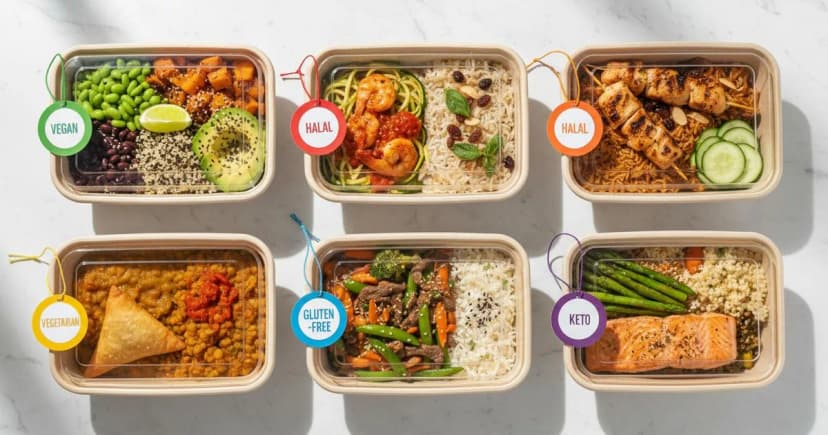
Absolutely, and I'll be specific about what I see constantly in that market. Burnaby office corridor teams - especially around Willingdon and Canada Way - consistently request lower-oil, lower-sodium options. Heavy, greasy lunches kill afternoon productivity, and I've watched teams quietly stop reordering when food feels too heavy. Our profile-based system captures these preferences once and matches them with appropriate restaurant partners automatically. We handle gluten-free, halal, vegan, and serious allergy accommodations through clear labeling and kitchen coordination, not last-minute phone calls to confused restaurant staff.
How does pricing compare to managing multiple delivery apps ourselves?
Here's the math most office managers don't see coming: UberEats and DoorDash charge restaurants 25-30% commission per order, which gets passed through as higher menu prices or delivery fees. Then you're paying service fees across multiple apps, dealing with different tipping structures, and your admin is burning 30 minutes weekly just reconciling receipts from four different platforms. your meal subscription service's consolidated billing eliminates that coordination tax entirely. You get transparent, predictable pricing with one monthly statement instead of chasing individual receipts through expense software that kicks back incomplete line items.
Related Articles

The Hidden Cost of Not Feeding Your Team
Your company loses $130K+ yearly to lunch errands, decision fatigue, and turnover premiums you never
Corporate Meal Programs Reduce Absenteeism by 27%
Corporate meal programs cut employee absenteeism by 27% and save Vancouver companies $3,500-$5,000 p
How to Pitch Subsidized Lunches to Your CFO
Your CFO won't approve a meal program because "it's nice for the team." Here's the financial case —
Ready to streamline your office meals?
Join 100+ Vancouver offices enjoying hassle-free lunch delivery.
Request a Demo