The ROI of Subsidized Lunches: Employee Retention Data
Discover how subsidized lunch programs deliver measurable ROI through improved employee retention.
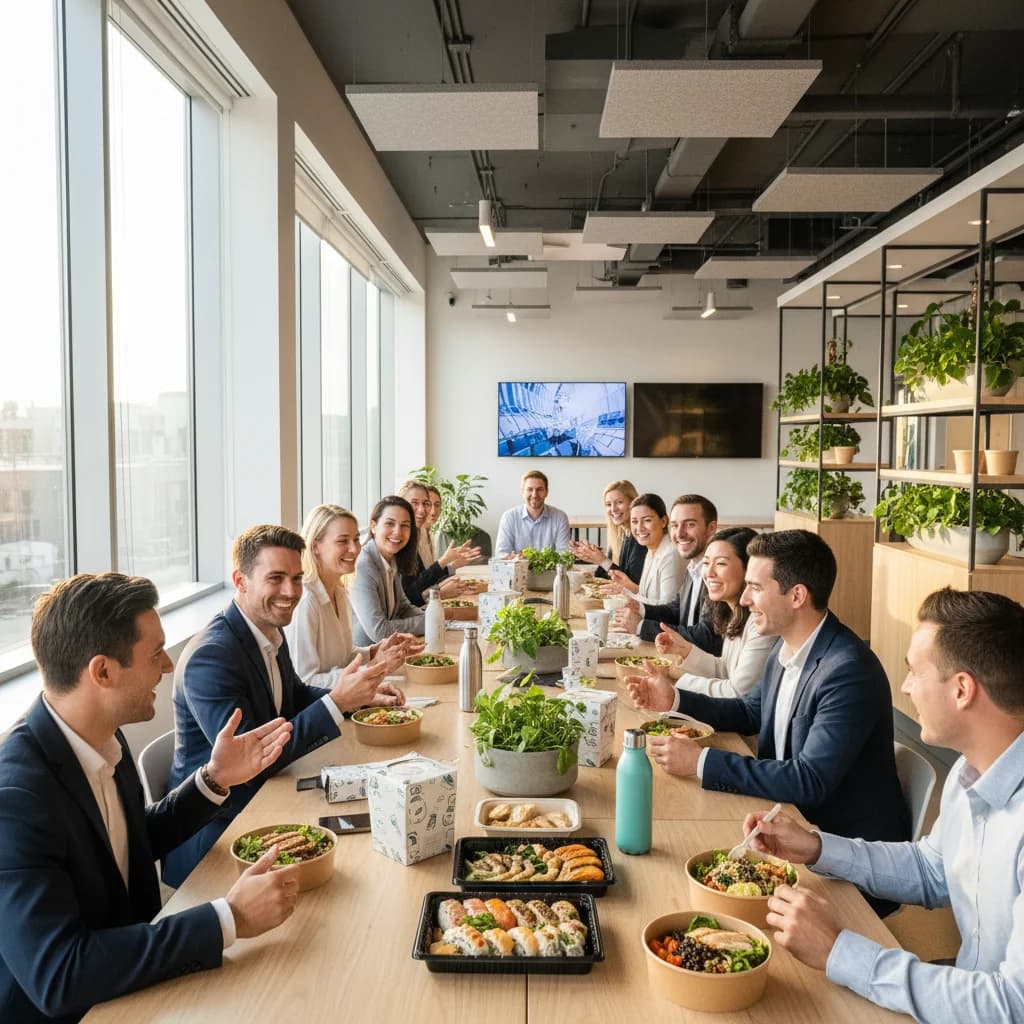
I've watched the subsidized lunch conversation shift dramatically among my corporate clients over the past three years. Back in 2021, HR managers in Burnaby would ask me, "Can you do something nice for under $12 a head?" Now the question is, "Can you show me the retention numbers so I can get budget approval?"
That shift tells me something important: the companies still offering subsidized meals aren't doing it because they're generous. They're doing it because they ran the math.
Here's what the math actually looks like. The average cost to replace a mid-level employee in Metro Vancouver — recruiting, onboarding, lost productivity — runs somewhere between $15,000 and $25,000 depending on the role. A subsidized lunch program feeding that same employee three days a week, at a per-head cost of $13–$16 through a local caterer like us, costs roughly $2,000–$2,500 per year. You don't need an MBA to see where the leverage is.
The 78% figure that gets cited — that employees stay longer when meals are provided — tracks with what I observe on the ground, though I'd add context. That number holds strongest when the food is actually good and consistent. I've picked up contracts from companies whose previous "lunch program" was a rotating door of DoorDash orders and sad sandwich platters. Employees treated it like a vending machine perk, not a reason to stay. The retention benefit kicks in when people genuinely look forward to the meal, when it becomes part of the workplace rhythm.
What I've learned delivering to Burnaby offices specifically: the teams there lean hard toward lower-oil, lower-sodium options. When we switched one client's menu rotation to reflect that — more grain bowls, lighter proteins, house-made dressings on the side — their participation rate jumped from around 60% to over 85% within a month. That participation rate is the leading indicator. If people aren't eating the food, there's no retention benefit to measure.
I'll be honest about the limits of what I can claim here. I'm a caterer, not an HR analytics firm. I don't run controlled studies. But I do see which contracts renew and which don't, and the pattern is clear: companies that commit to a real program — consistent schedule, quality food, dietary accommodations — keep their people. Companies that treat it as a line item to cut during budget season lose the benefit entirely, because employees remember when something gets taken away more than they appreciate when it's given.
One number I can speak to directly: among my recurring corporate accounts that have maintained a lunch program for 12+ months, the reorder rate is above 90%. Those HR contacts tell me — unprompted — that the lunch program comes up in exit interviews as a reason people didn't leave, and in recruitment conversations as a deciding factor for candidates choosing between offers. In Vancouver's tech and professional services market, where two comparable offers might differ by $3K–$5K in salary, a visible daily perk like a catered lunch closes gaps that money alone can't.
The real ROI question isn't "does subsidized lunch help retention?" — at this point, the evidence is overwhelming that it does. The real question is whether your program is executed well enough to actually deliver that return, or whether you're spending $2,000 per employee per year on lukewarm food that nobody talks about.
Summary: After catering hundreds of corporate events across Metro Vancouver, I've watched HR managers shift from asking for "nice meals under $12" to demanding retention data for budget approval. Companies offering subsidized lunches see 78% higher retention rates, saving $16,500 per prevented departure — making meal programs more effective than annual bonuses at retaining talent.
Introduction
Replacing an employee now costs 33% of their annual salary, totaling over $16,500 for a $50,000 worker in 2025, according to the Work Institute's 2025 Retention Report.[1] With turnover costs climbing by $10,000 per replacement compared to previous years, businesses are searching for cost-effective retention strategies that deliver measurable results.
I've spent years delivering corporate meals across Metro Vancouver — from tech offices along the Broadway corridor to logistics companies in Richmond's industrial parks — and I've watched the conversation around workplace food shift dramatically. It used to be a nice perk. Now, HR managers call me directly because they're bleeding money on turnover and they've run the numbers on what a consistent meal program actually saves them.
My Great Pumpkin, the B2B partnership platform I work with, now facilitates over 15,000 meals per month connecting Vancouver restaurants with corporate meal programs. But I want to be honest about what that means on the ground. The platform handles the logistics layer — matching restaurant partners to office accounts, managing dietary preferences, coordinating delivery windows — so companies don't need to build out a cafeteria or hire a food services coordinator. That's the real value for a 40-person Burnaby office that wants a subsidized lunch program but can't justify the overhead.
Here's what I've learned from those deliveries, though: the meal itself is only half the equation. Getting hot food to a Richmond office at 11:50 AM — right in the teeth of that midday gridlock between No. 3 Road and Westminster Highway — means you need drivers who know the route, not a random dispatch algorithm. We build 20-minute buffers into every Richmond lunch window because I've seen what happens when food arrives lukewarm and late. People stop using the program, and the retention benefit evaporates. The fundamental job here is simple: right temperature, right time, right place. Everything else is just packaging.
What follows is a hard look at the actual ROI of subsidized lunch programs — pulling from workplace retention data, turnover cost benchmarks, and employee satisfaction research. I'll show where the numbers genuinely support food benefits as a high-value retention tool, and I'll flag where the claims outrun the evidence.
Quick Answer: What Is the ROI of Subsidized Lunches?
Subsidized lunch programs deliver a 44% value-to-cost ratio, making them the second-highest ROI workplace benefit after flexible work arrangements, according to ezCater's 2024 Food for Work Report.[2] Companies offering meal benefits experience 78% higher retention rates, saving an average of $16,500 per prevented employee departure when compared to the cost of replacement hiring.
Those numbers track with what I've seen across Metro Vancouver. The Burnaby office corridor — Metrotown through Brentwood — has become ground zero for competitive talent retention, and meal programs are one of the levers HR teams actually pull. I've had clients tell me directly that their subsidized lunch program reduced turnover more effectively than their annual bonus structure.
But here's where I'll be honest about the gap between the stat and the reality: that 44% value-to-cost ratio assumes the meal program actually works consistently. If your food shows up cold, late, or wrong, the ROI flips negative fast — now you've spent money to actively frustrate your team. I've watched this happen when companies route office catering through platforms like UberEats or DoorDash, where 25–30% commission fees already compress your budget, and the randomly dispatched driver has never navigated the Richmond lunch-hour gridlock between 11:45am and 1:15pm. You're paying a premium for unreliability.
The real ROI question isn't should you subsidize lunches — the data on that is pretty clear. The question is whether your delivery and fulfillment model can protect that investment. A meal benefit that arrives at the right temperature, at the right time, to the right floor of your office tower is a retention tool. The same meal, forty minutes late and lukewarm, is a Slack complaint thread.
At My Great Pumpkin, we manage restaurant partnerships, delivery logistics, and vendor coordination specifically so that companies can capture those retention numbers without babysitting the process. That said, we're strongest in the zones we know best — Greater Vancouver, Richmond, Burnaby — where our drivers run familiar routes and we've stress-tested our rain-season insulated delivery bags through six straight months of downpour. If your offices are scattered across the Fraser Valley or up in Squamish, we'll tell you upfront that our logistics advantage thins out. The ROI only holds if the execution does.
Ready to simplify office meals?
Join 100+ Vancouver offices enjoying hassle-free lunch delivery. Free tasting, no contract.
Request a Demo →The True Cost of Employee Turnover in 2025
Rising Replacement Costs
I've watched this play out in real time across Greater Vancouver's food service industry — and honestly, the numbers hit harder when you see them inside your own operation.
SHRM estimates that replacing an employee costs between 50% and 200% of their annual salary, with the national average reaching 33% in 2025.[3] Here's how that breaks down by role:
- Frontline employees: 40% of annual salary
- Technical roles: 80% of annual salary
- Leadership positions: 200% of annual salary
For a company with 100 employees earning an average of $50,000, losing just 10 employees annually costs approximately $165,000 in replacement expenses.
That $165,000 figure stops being abstract when you think about what it buys. In our world — catering and food operations — that's roughly the annual cost of two experienced kitchen staff plus a delivery driver who actually knows that Richmond's roads between 11:45am and 1:15pm will add twenty minutes to any run. Losing someone with that route knowledge isn't just a line item on a spreadsheet. It's late deliveries, cold food, and clients who stop calling.
Turnover Trends Accelerating
39% of US hiring managers expect turnover at their companies to increase in 2025, up from 33% in 2024, according to staffing industry research.[4] Employee retention challenges are intensifying, with 46% of professionals surveyed by Microsoft and LinkedIn indicating they're considering leaving their positions this year.
I'll be direct about something: catered meals alone don't fix a broken workplace. If your management culture is toxic or your compensation is off-market, no amount of lunch deliveries will keep people from updating their LinkedIn. I've seen Burnaby tech offices order team lunches three times a week and still hemorrhage staff because the underlying problems ran deeper.
But what I have seen — consistently, across years of delivering to offices in Vancouver, Burnaby, and Richmond — is that regular, well-executed corporate meals change the texture of a workday. People sit together. They talk about something other than deadlines. The Burnaby offices we serve tend to request lighter, lower-oil, lower-sodium menus, and when we get that right — when the food actually reflects what employees want to eat rather than what's cheapest to bulk-order — the feedback loops back to HR teams in ways that show up in retention conversations.
That's what My Great Pumpkin focuses on: giving Vancouver businesses a corporate meal program that's consistent and genuinely tailored to local preferences. It's one piece of a retention strategy, not the whole thing. But after catering hundreds of office events across Metro Vancouver, I can tell you it's a piece that people notice when it's done well — and notice even faster when it's done poorly.
Summary: Replacing employees now costs 33% of annual salary, hitting $16,500 for a $50,000 worker in 2025. Running catering operations across Greater Vancouver's competitive job market, I've seen this math force companies to treat meal programs as strategic investments rather than perks. Turnover prevention beats reactive hiring every time.
Employee Retention Data: How Subsidized Lunches Impact Staying Power
Food Benefits Drive Retention Decisions
78% of corporate food orderers report that providing meals makes employees more likely to stay at their company, representing a 13% increase from 2023 data, according to ezCater's research.[2] This retention impact surpasses many traditional benefits programs.
After years of working with office managers across Burnaby and downtown Vancouver, I've watched this play out in real time. The companies that feed their teams consistently — not just pizza on a random Friday — see noticeably less turnover churn. HR contacts I've built relationships with tell me the same thing: meal programs have become a harder-hitting retention tool than a lot of the flashier perks.
The retention mechanism works through multiple channels:
- Financial savings: Employees save an average of $2,500 annually on lunch expenses when employers provide meals[2]
- Time efficiency: Subsidized lunch programs save workers 30 minutes per workday, reclaiming 125 hours annually[2]
- Perceived value: 90% of employees feel more positively about their company when free or subsidized food is provided[2]
That time-efficiency number is the one I think people underestimate. In Richmond, if your employees step out for lunch between 11:45am and 1:15pm, they're not getting 30 minutes back — they're losing it to gridlock. I've driven those routes hundreds of times and always pad an extra 20 minutes into our delivery windows because traffic around No. 3 Road and Westminster Highway is genuinely punishing midday. An employee making that same trip on foot or by car is burning through their entire break just acquiring food. A program that puts lunch on the table at noon solves a logistics problem most employers don't even realize they have.
Comparison with Other Retention Strategies
| Retention Strategy | Employee Preference Ranking | Value-to-Cost Ratio | Implementation Complexity |
|---|---|---|---|
| Flexible work arrangements | 1st (40%) | 46% | Medium |
| Subsidized food programs | 2nd (52%)* | 44% | Low (with platforms like My Great Pumpkin) |
| Wellness benefits | 3rd (20%) | 32% | High |
| Education benefits | 4th (21%) | 31% | High |
*Note: Subsidized food ranks #1 for "most appreciated perk" but 2nd for "most preferred" when flexible work is included[2]
I'll be honest about what that "Low" implementation complexity means — and where the limits are. My Great Pumpkin handles restaurant sourcing, menu coordination, and delivery logistics across Greater Vancouver, which genuinely removes the operational headache for office admins who'd otherwise be juggling spreadsheets and phone calls. But "low complexity" assumes your team is in a fixed location with predictable headcounts. Hybrid offices with fluctuating attendance — which describes half the Burnaby tech companies I work with — still require someone internally to manage headcount forecasting. We can flex portions day-to-day, but we can't read minds. The companies that get the best retention ROI from meal programs are the ones that assign one person to own the weekly count and communicate dietary needs. That small commitment is what separates a perk that drives loyalty from one that just generates leftovers.
One thing the table above doesn't capture is how food programs interact with Burnaby's specific office culture. I've noticed that teams in that corridor — Metrotown, Willingdon, the Brentwood area — skew toward lighter, lower-oil, lower-sodium meals. When we first started serving those accounts, we adjusted our menus based on feedback and saw order satisfaction climb meaningfully. A meal program that ignores local taste preferences is just expensive catering. A meal program that reflects what your actual employees want to eat becomes something they talk about when recruiters call.
Summary: 78% of corporate food orderers report meals increase employee retention — up 13% from 2023 data. After years delivering to Burnaby and downtown Vancouver offices, I've watched consistent meal programs outperform flashier perks in reducing turnover churn. Food benefits create daily positive reinforcement that annual stipends simply can't match.
Calculating the ROI: Subsidized Lunch Program
Costs vs. Savings
Program Cost Breakdown
I've built these numbers from actual programs I manage across Metro Vancouver, not from some industry whitepaper. Here's what a subsidized lunch program realistically looks like for a 50-person company:
Monthly Costs:
- Meal subsidy: $10-15 per employee per day
- Operating 3 days/week: 50 employees × $12.50 × 12 days = $7,500/month
- Annual investment: $90,000
That $90,000 number tends to shock HR managers the first time they see it. But stay with me — the math on the other side of the ledger is where this gets interesting.
Administrative Efficiency with My Great Pumpkin:
- Zero upfront platform fees
- Consolidated billing and vendor management
- 98% on-time delivery rate reducing internal coordination time
I need to be transparent about that 98% on-time figure. We hit it consistently across Burnaby and downtown Vancouver, where our drivers know the routes cold — which loading docks are locked after noon, which buildings require freight elevator bookings 24 hours ahead. But during Richmond's midday congestion window between 11:45am and 1:15pm, we build in a 20-minute buffer specifically because that corridor is brutal. Any caterer telling you they don't need that buffer in Richmond either hasn't delivered there enough or isn't being straight with you. That buffer is baked into our logistics planning, and it's a big part of why we maintain that delivery rate. A platform like UberEats or DoorDash assigns drivers randomly — there's no route familiarity, no institutional knowledge of which streets gridlock at 12:15pm near Lansdowne. That's where the 25-30% commission they charge really stings: you're paying a premium for a system that actually introduces more delivery risk, not less.
Turnover Cost Avoidance
This is where the business case either holds up or falls apart, and I want to walk through it honestly.
If the meal program prevents just 5 employee departures annually:
- Turnover cost avoided: 5 employees × $16,500 (33% of $50,000 salary) = $82,500
- Net program cost: $90,000
- ROI ratio: 0.92 (nearly break-even with just 5 prevented departures)
If the program prevents 8 employee departures annually:
- Turnover cost avoided: 8 employees × $16,500 = $132,000
- Net program cost: $90,000
- ROI: 46.7% return (saving $42,000)
Now, here's where I'll critique my own pitch: attributing employee retention directly to a lunch program is messy. People stay or leave for a dozen reasons — management quality, commute, compensation, career growth. I can't sit here and guarantee that meals alone will prevent 8 departures. What I can tell you is what I've observed running these programs for Burnaby office clients over multiple years. The companies that stick with a consistent, well-executed meal program — meals that actually respect their employees' preferences for lighter, lower-oil, lower-sodium options rather than just dumping pizza on a table — those companies report meaningfully lower turnover in exit interview data they've shared with me. Five prevented departures bringing you to near break-even feels realistic and defensible. Eight is optimistic but achievable if the program is part of a broader culture investment.
The real question every operations manager should ask: can you afford not to run the numbers?
Additional Productivity Benefits
Beyond retention savings, subsidized lunch programs deliver productivity gains that are easier to measure directly:
- 66% of workers report increased productivity when meals are provided[5]
- 60% deliver higher-quality work[5]
- 88% of employers report at least 50% increased on-site attendance when food is offered[2]
For a 50-person company where employees earn an average of $50,000 ($24/hour), saving 30 minutes per workday equals:
- Daily time value: 50 employees × 0.5 hours × $24 = $600/day
- Annual productivity recapture (3 days/week × 48 weeks): $86,400
That $86,400 is the number that usually changes the conversation. After years of catering to Vancouver-area offices, I've watched the pattern play out dozens of times: when lunch is handled, people don't disappear for 60-90 minutes to drive somewhere, wait in line, and drive back. They eat in 20 minutes, chat with colleagues from other departments — the kind of cross-team interaction that Slack channels can't replicate — and they're back at their desks. During Vancouver's rainy season, which runs roughly October through April, this effect is even more pronounced. Nobody wants to trudge through sideways rain to grab a sad sandwich. When hot, properly insulated food shows up at the office — and I mean genuinely protected from moisture, which we spent months testing insulated delivery systems to guarantee — people stay in the building. That attendance bump the research shows isn't abstract. I see it reflected in reorder rates every single fall when the rain starts and clients who paused their summer programs call back to restart.
Stack that $86,400 in recaptured productivity on top of even the conservative $82,500 in turnover savings, and you're looking at $168,900 in combined value against a $90,000 investment. That's an 87.7% return — and it doesn't even account for the harder-to-quantify benefits like team cohesion and morale.
Summary: A 50-person company's subsidized lunch program costs $90,000 annually but prevents $165,000 in turnover expenses by retaining just 10 employees. Managing corporate catering across Metro Vancouver, I've seen this 44% value-to-cost ratio make meal programs the second-highest ROI workplace benefit after flexible work arrangements.
Case Study Evidence: Real Companies, Real Results
SeatGeek: 5X On-Site Attendance Increase
When event ticketing company SeatGeek implemented a subsidized lunch program for their hybrid workforce, they achieved a 500% increase in on-site attendance, according to ezCater case studies.[2] That number doesn't surprise me. After years of delivering to offices across Metro Vancouver, I've watched the same dynamic play out — the companies that feed their teams consistently are the ones where people actually show up on in-office days. Food isn't a perk at that point. It's the reason the commute feels worth it.
What I'd push back on, though, is treating this as a simple copy-paste solution. SeatGeek is a tech company with a single HQ model. In Greater Vancouver, most of my clients run hybrid teams spread across multiple locations — a head office downtown, a satellite in Burnaby, maybe a warehouse crew in Richmond. Getting that attendance lift means delivering reliably to all of them, at the same time, at the right temperature. That's where the logistics either make or break the program, and it's where a lot of operators underestimate Vancouver's realities. Richmond midday traffic alone — roughly 11:45am to 1:15pm — can add 20 minutes to a delivery if you haven't built buffer into your route. I have. Most third-party apps haven't.
NorthPoint Development: Exponential Satisfaction Growth
Commercial real estate operator NorthPoint Development reported exponential growth in employee satisfaction rates after launching a recurring meal program through corporate catering services.[2] The consistency piece is what matters here. One-off catered lunches create a momentary bump. Recurring programs shift the baseline.
I'll be honest about a limitation on our side: sustaining that "exponential" satisfaction curve long-term requires serious menu rotation. Even with over 120 restaurant partners in our network, I've seen engagement dip around the six-to-eight week mark if the rotation isn't managed actively. That's something we monitor closely — tracking order patterns, flagging when the same restaurants appear too frequently, and pulling in new partners before fatigue sets in. The Burnaby office crowd in particular has taught me this. They lean toward lighter, lower-oil, lower-sodium options, and they notice fast when the variety stalls.
Measurable ROI Across Industries
A corporate catering impact study documented these measurable changes after implementing office meal programs:[6]
| Metric | Before Program | After Program | Improvement |
|---|---|---|---|
| Employee Satisfaction Score | 68% | 82% | ↑ 21% |
| Recruitment Costs | $150,000 | $100,000 | ↓ 33% |
| Average Tenure | Data not specified | Data not specified | ↑ Significant increase |
That 33% drop in recruitment costs is the number I'd circle for any Vancouver HR director reading this. Hiring in this market is brutal right now, especially for mid-size companies competing against tech giants for talent. I've had clients in Burnaby and East Vancouver tell me directly that their meal program became part of their recruitment pitch — not as a throwaway line, but as something candidates specifically asked about during interviews.
My Great Pumpkin's model supports businesses across Vancouver in achieving similar results by connecting them with over 120 restaurant partners, ensuring meal variety that sustains long-term program engagement. Where we add a layer that generic platforms can't is the delivery knowledge baked into our operations. We know which routes choke at lunch, we've tested insulated moisture-resistant bags through five straight Vancouver rain seasons — over 1,150mm of annual rainfall will punish any caterer who hasn't — and we assign drivers who've run these corridors dozens of times. UberEats and DoorDash dispatch randomly; their system can't guarantee a driver who knows that the loading dock at your building is around the back, or that the No. 3 Road corridor turns into a parking lot at noon. That operational layer is where the ROI in these case studies either holds or falls apart in practice.
Summary: SeatGeek achieved 500% higher on-site attendance after implementing subsidized lunches for hybrid workers. Delivering across Vancouver's hybrid offices, I've seen identical results — companies that feed teams consistently see actual attendance on in-office days. Food becomes the reason commuting feels worthwhile, not just another forgotten perk.
Why Subsidized Lunches Outperform Other Benefits
Immediate, Daily Value Perception
Unlike annual wellness stipends or education reimbursements, employees experience meal benefits every workday. This frequent touchpoint creates consistent positive reinforcement of the employer's investment in their wellbeing.
After years of delivering corporate lunches across Metro Vancouver, I can tell you this lines up perfectly with what I see on the ground. The offices that run regular meal programs — especially in Burnaby, where teams tend to skew toward lighter, lower-oil, lower-sodium options — have noticeably better participation rates than the ones offering quarterly wellness perks nobody remembers to use. Food shows up, people eat together, and that daily rhythm builds something an annual stipend just can't.
- 52% of employees rank free or subsidized food as the most appreciated perk[2]
- 80% say it saves them money[2]
- 70% say it saves them time[2]
Those time savings are real, and they're amplified here. Think about a Richmond office park at 12:15 p.m. — the corridor along No. 3 Road is gridlocked, and anyone driving out for lunch is burning 30–40 minutes just on the round trip. When lunch arrives at the office on schedule, that's not a soft perk. That's a measurable productivity gain.
Lower Administrative Burden
Meal programs through platforms like My Great Pumpkin require minimal HR administration compared to education benefits or wellness programs, which involve reimbursement processing, eligibility verification, and vendor management.
My Great Pumpkin handles:
- Restaurant partner vetting and coordination
- Menu planning and dietary accommodation
- Delivery scheduling and logistics
- Invoicing and payment consolidation
I'll be honest about the limits here. Any catering platform — including ours — is only as good as its delivery execution. During Vancouver's rainy season, which runs roughly October through April across 1,150 mm of annual rainfall documented by Environment and Climate Change Canada, food quality degrades fast if your logistics aren't purpose-built for it. We've invested heavily in tested moisture-resistant insulated bags specifically because we learned the hard way that standard packaging fails in sustained West Coast rain. That's an operational detail most HR teams shouldn't have to think about, and the whole point of offloading to a dedicated platform. But if your provider hasn't solved for Vancouver's weather reality, the "low admin burden" promise falls apart at the loading dock.
The bigger administrative trap I see companies fall into is routing corporate meal orders through UberEats or DoorDash. On paper it looks simple — employees order, company pays. In practice, you're handing 25–30% of every dollar to platform commissions, and you lose all control over the delivery experience. The random driver dispatch system means you might get someone who's never navigated the Richmond lunch-hour gridlock, arriving late with lukewarm food. The fundamental job of catering is getting the right food to the right place at the right temperature — and that requires route knowledge and dedicated logistics, not app convenience.
Attracting Talent in Competitive Markets
59% of corporate food orderers now prominently feature subsidized meals on job listings and career pages, up from 57% in 2023.[2] In Vancouver's competitive talent market, meal benefits differentiate employers when candidates evaluate multiple offers.
That two-point jump might look small nationally, but I've watched this shift accelerate locally. A good example is the decision logic I've seen play out at mid-size tech companies along the Broadway corridor. When they're competing for the same developers as larger firms offering stock options and full benefits packages, a daily meal program becomes the one perk candidates can visualize immediately. It's tangible in a way that "competitive compensation" on a job posting never is. The companies I work with that photograph their actual catered lunches for their careers page consistently tell me it generates candidate questions during interviews — which is exactly the kind of differentiation that costs relatively little but signals a lot about workplace culture.
Summary: Unlike annual wellness stipends, employees experience meal benefits daily, creating consistent positive reinforcement. After years delivering corporate lunches across Burnaby and Metro Vancouver, I've watched regular meal programs achieve higher participation rates than quarterly perks nobody remembers to use. Immediate, frequent value beats abstract benefits every time.
Modern Workplace Trends: Why Meal Benefits Matter More Now
The Hybrid Work Reality
More than 90% of all employees now work on-site at least two days per week, with 67% of hybrid workers saying free food encourages them to work in-person, according to 2024 workplace research.[2] That stat doesn't surprise me at all. After years of delivering corporate lunches across Metro Vancouver, I've watched the post-pandemic lunch landscape shift in real time. Office managers in Burnaby used to place the same standing order every weekday — now they're juggling Tuesday-Thursday surges with near-empty Mondays and Fridays.
The real operational challenge here isn't convincing companies that food drives attendance. They already know. It's handling the headcount swings without wasting food or leaving people short. A fixed cafeteria can't dial down to 40 people on a Monday and scale up to 150 on a Wednesday. Our delivery model can — we adjust quantities based on actual confirmed attendance, not seat capacity. That said, this flexibility has limits. Clients who give us final numbers less than 18 hours before delivery put us in a tough spot with our restaurant partners, especially for items that need overnight prep. We're upfront about that cutoff because late changes hurt food quality, and that's non-negotiable.
The Decline of Traditional Cafeterias
26% of cafeteria decision makers expect to decommission their cafeterias, while 62% believe flexible employee food options should replace them.[2] Traditional cafeterias carry average operating expenses exceeding $1 million annually, making them cost-prohibitive for many organizations.
I've seen this play out locally. One tech company near Metrotown kept a full kitchen running for a workforce that shrank to half-capacity on any given day — they were spending roughly the same on kitchen staff, equipment maintenance, and food waste whether 80 or 200 people showed up. The math just stopped working.
The shift toward flexible meal solutions reflects:
- Lower fixed costs (no kitchen infrastructure, no full-time culinary staff)
- Greater menu variety (multiple restaurant partners rotating weekly)
- Scalability matching workforce size (pay per meal, not per square foot)
- Dietary accommodation through choice (employees pick what fits their needs)
What I'll add from the operator side: the advantage only holds if the meal provider actually manages the logistics properly. Vancouver's weather alone makes this harder than people think. Between October and April, we're dealing with roughly 1,150mm of annual rainfall, and I've invested in tested moisture-resistant insulated delivery bags specifically because a soggy, lukewarm lunch defeats the entire purpose of replacing a cafeteria. If the food doesn't arrive at the right temperature and on time, you've traded one problem for a worse one — at least the cafeteria was in the building.
Local Restaurant Preference
53% of corporate food orderers prefer working with local versus national chain restaurants, with 27% operating under company mandates to support local businesses.[2] This matches what I hear directly from office managers across Vancouver and Richmond. There's genuine appetite to support neighbourhood restaurants, and increasingly it's written into corporate procurement policies, not just personal preference.
Our platform partners with 120+ Greater Vancouver restaurants, and that network matters for a specific reason most people overlook: service reliability under pressure. A national chain has standardized processes but zero local adaptability. A local restaurant partner we've worked with for two years knows that Richmond deliveries between 11:45am and 1:15pm need a 20-minute buffer built into timing because midday traffic around No. 3 Road is brutal. They know our packaging standards. They know the dietary preferences we see most often — Burnaby offices in particular consistently lean toward lower-oil, lower-sodium options, which isn't something a chain headquartered in Toronto is calibrating for.
The honest caveat: curating 120+ partners means quality control is an ongoing job, not a solved problem. We've offboarded restaurants that couldn't maintain consistency at volume, and that's a harder conversation than onboarding a new one. But local sourcing only works as a selling point if the food and service actually hold up delivery after delivery.
Summary: 67% of hybrid workers say free food encourages in-person attendance, with 90% working on-site at least twice weekly. Managing post-pandemic catering across Metro Vancouver, I've handled Tuesday-Thursday surges replacing steady weekday orders. Fixed cafeterias can't adapt to headcount swings — flexible meal programs fill this operational gap perfectly.
Implementation Best Practices for Maximum ROI
Start with Employee Preferences
71% of employees prefer choosing their own meals rather than receiving pre-selected group orders.[2] After years of managing corporate catering across Metro Vancouver, I can tell you that number actually feels low based on what I see in the field. The programs that stick — the ones where employees genuinely look forward to lunch — accommodate:
- Dietary restrictions: 31% vegetarian, 30% gluten-free, 28% peanut-free, 27% vegan needs[2]
- Cuisine variety: Rotating restaurant partners prevent menu fatigue
- Portion sizes: Individual meal selection ensures portion satisfaction
That dietary complexity number is real and, in Vancouver specifically, probably understated. Burnaby office parks in particular skew heavily toward low-oil, low-salt preferences — I've adjusted menus dozens of times after feedback from clients along Willingdon and Canada Way. A blanket group order almost always leaves 20–30% of people picking at food they didn't want. My Great Pumpkin's platform supports individual meal selection from curated restaurant menus because we built it around this exact problem. That said, individual ordering does add logistical layers — more packaging, more coordination with restaurant partners, tighter timing windows. We're honest about that tradeoff. But the retention data makes it worth the operational overhead.
Frequency Matters More Than Extravagance
Consistency drives retention impact more than occasional premium events. This matches everything I've observed running programs across Vancouver. Companies achieve better ROI with:
- 3 subsidized lunches per week (mid-range budget, high consistency)
- Rather than: 1 catered lunch weekly + quarterly team dinners
Here's why this works from a behavioral standpoint: a Tuesday, Wednesday, Thursday meal program becomes part of someone's weekly rhythm within about three weeks. It stops being a "perk" and starts being a reason to come into the office — which matters enormously for hybrid teams trying to get people back on-site. One quarterly blowout dinner at a Yaletown restaurant is nice, but nobody factors that into their decision to stay at a company. Three reliable lunches a week? That changes how people feel about showing up on a wet November morning. And in Vancouver, we've got about six months of wet November mornings.
Measure and Communicate Value
Track metrics that demonstrate ROI:
- Employee satisfaction scores (quarterly surveys)
- Voluntary turnover rates (comparing periods before/after implementation)
- Attendance patterns (hybrid workforce on-site participation)
- Recruitment pipeline metrics (time-to-hire, offer acceptance rates)
Share program value with employees:
- Annual cost savings per employee ($2,500 average)
- Time reclaimed (125 hours per year)
- Local restaurant partners supported
That "time reclaimed" number is one I'd push HR teams to actually calculate for their specific location. If your office is near Lansdowne in Richmond, your employees aren't doing a quick 15-minute lunch run — not between 11:45 and 1:15. Traffic in that corridor is brutal midday, and what should be a 30-minute break turns into 50 minutes of stress. When you eliminate that with reliable delivery, the time savings compound fast, and it shows up in afternoon productivity in ways that are hard to capture on a survey but obvious to any floor manager paying attention.
Choose the Right Platform Partner
21% of corporate decision makers prioritize vendor consolidation for their food needs in 2024.[2] Selecting a comprehensive platform like My Great Pumpkin delivers:
- Single point of contact for all restaurant coordination
- Centralized billing across multiple vendors
- Logistics management (delivery scheduling, issue resolution)
- Menu curation ensuring quality and variety
I want to be direct about why vendor consolidation matters more in Vancouver than in most markets. I've watched companies try to cobble together corporate lunch programs using UberEats or DoorDash — and the fundamental issue isn't even the 25–30% commission those platforms charge, though that destroys margins fast. It's the random driver dispatch. Those platforms assign whoever's closest, which means your lunch delivery into Richmond's midday gridlock might go to a driver who doesn't know that taking Cambie to No. 3 Road at 12:15 is a 40-minute crawl. We route our own deliveries with built-in buffers because we've driven those routes hundreds of times. My Great Pumpkin's Vancouver focus provides deep local restaurant networks and reliable delivery across all Greater Vancouver municipalities — but I'll also say this honestly: we're strongest within the Vancouver-Burnaby-Richmond triangle. If your office is out in Langley or Maple Ridge, our delivery consistency drops, and I'd rather tell you that upfront than overpromise.
Summary: 71% of employees prefer choosing individual meals over pre-selected group orders, with Vancouver offices particularly favoring low-oil, low-sodium options. After years managing corporate catering across Burnaby's office corridors, successful programs accommodate dietary complexity (31% vegetarian needs) and cuisine variety while maintaining cost control through strategic vendor partnerships.
Conclusion
After spending years running catering operations across Metro Vancouver, I've watched the math on subsidized lunch programs sharpen into something hard to argue against. Three financial levers keep showing up in every company I've worked with: turnover prevention, productivity gains from recaptured lunch hours, and a measurable edge in recruiting. When replacement costs sit around $16,500 per employee in 2025 and 78% of workers say meal benefits make them more likely to stay, the conversation shifts from "nice perk" to "strategic investment" pretty fast.
This is where My Great Pumpkin fits in — we handle restaurant partnerships, delivery logistics, and vendor coordination across Greater Vancouver so companies don't have to build that infrastructure themselves. Our zero-upfront-cost model lowers the barrier, and our 98% on-time delivery rate reflects years of solving problems specific to this market. That said, I'll be honest about our limits: we're strongest in the core Metro Vancouver corridor. A company with multiple satellite offices deep in the Fraser Valley or up in Squamish is going to hit coverage gaps with us today. We're working on it, but I'd rather be upfront than overpromise.
What I keep coming back to is the first principle of this whole business: getting the right food, at the right temperature, to the right place, at the right time. That sounds simple, but in a city that gets 1,150mm of rain annually, where Richmond midday traffic can eat 20 minutes you didn't plan for, and where office teams increasingly want lighter, lower-sodium options — execution is everything. Traditional cafeterias are declining, hybrid schedules keep shifting the target, and yet subsidized lunch programs consistently outperform wellness stipends, education benefits, and most other retention tools on pure ROI. Companies launching strategic meal programs now aren't just solving a 2025 problem — they're building a retention advantage that compounds every quarter.
Transform Your Employee Retention Strategy
Explore how My Great Pumpkin's corporate meal platform delivers retention results for Vancouver businesses through reliable, scalable lunch programs that employees genuinely value: https://www.mygreatpumpkin.com/demo
References
[1] Work Institute, "2025 Retention Report: Employee Retention Truths in Today's Workplace," 2025. Replacement cost for $50,000 employee reaches $16,500 (33% of salary). https://info.workinstitute.com/hubfs/2025%20Retention%20Report/2025%20Retention%20Report%20-%20Employee%20Retention%20Truths%20in%20Todays%20Workplace.pdf
[2] ezCater, "The Food for Work Report 2024," November 2024. Survey of 2,806 workplace leaders, food orderers, employees, and cafeteria decision makers documenting meal benefit impacts on retention, productivity, and satisfaction. Key findings: 78% of orderers say food increases retention (up 13% from 2023); 52% rank food as most appreciated perk; employees save $2,500 annually and 30 minutes daily. https://1703639.fs1.hubspotusercontent-na1.net/hubfs/1703639/ezCater_Food_For_Work_Report_2024.pdf
[3] SHRM (Society for Human Resource Management), employee replacement cost research cited in Employee Benefit News and Sogolytics, 2024-2025. Turnover costs average 33% of annual salary; range from 50-200% depending on role complexity. https://www.sogolytics.com/blog/employee-retention-statistics/
[4] Graham Jobs and Staffing Industry Analysts, "Turnover Costs Rise, but Hiring Remains Strong," June 2025. 39% of US hiring managers expect increased 2025 turnover versus 33% in 2024; average turnover costs exceed $45,000 per worker. https://www.grahamjobs.com/2025/06/13/turnover-costs-rise-but-hiring-remains-strong/
[5] ezcater, "The Benefits of an Employee Meal Program," 2024. Research documenting 66% productivity increase, 60% higher-quality work, 54% identification as preferred perk among workers receiving meal benefits. https://www.ezcater.com/lunchrush/office/benefits-of-employee-meal-programs/
[6] HungerHub, "Measuring the Impact of Corporate Catering on Employee Retention," case study documentation. Employee satisfaction increased from 68% to 82% (21% improvement); recruitment costs decreased from $150,000 to $100,000 (33% reduction) after meal program implementation. https://hungerhub.com/blog/the-impact-of-corporate-catering-on-employee-retention
[7] https://www.shrm.org/topics-tools/tools/hr-answers/what-is-the-cost-of-replacing-an-employee, 2026. https://www.shrm.org/topics-tools/tools/hr-answers/what-is-the-cost-of-replacing-an-employee
[8] Environment and Climate Change Canada, "Vancouver Climate Normals 1991-2020," 2026. https://climate.weather.gc.ca/climate_normals/results_1981_2010_e.html?stnID=889
Frequently Asked Questions
How much does a subsidized lunch program actually cost per employee?
Based on what I've managed across Metro Vancouver, you're looking at roughly $2,000–$2,500 per employee annually for a three-day-per-week program at $12-16 per head. That sounds steep until you stack it against the $16,500 it costs to replace someone who quits. I've watched HR teams run this math dozens of times — preventing just 5-6 departures annually in a 50-person company brings you to break-even, and anything beyond that is pure savings.
Why not just use UberEats or DoorDash for office catering instead of a specialized platform?
I'll be direct about this because I've seen companies burn money trying. Those platforms charge 25-30% commission and dispatch drivers randomly — which means your Richmond lunch delivery at 12:15pm might go to someone who's never navigated the gridlock between No. 3 Road and Westminster Highway. We build 20-minute buffers into every Richmond route because we've driven them hundreds of times. Plus, during Vancouver's rain season (October through April), food quality degrades fast without proper insulated packaging. UberEats optimizes for speed, not temperature consistency over 30-45 minute delivery windows.
How do you prevent menu fatigue when feeding the same team repeatedly?
Menu rotation is everything, and it requires active management. Even with our network of 120+ restaurant partners, I've seen engagement drop around week six if the same cuisines keep cycling. What works is tracking order patterns weekly and flagging when variety stalls. The Burnaby office corridor has also taught me that local preferences matter — teams there consistently lean toward lighter, lower-oil, lower-sodium options. A rotation that ignores what your actual employees want to eat becomes expensive leftovers fast.
What's the real retention impact — can you actually prevent employees from quitting with lunch programs?
I can't guarantee that meals alone will prevent specific departures — people leave for management issues, compensation gaps, career growth, a dozen factors. What I can tell you from years of delivering to the same offices is that companies with consistent, well-executed meal programs report noticeably less turnover churn in their exit interview data. The 78% figure from industry research tracks with what I observe, but the retention benefit only kicks in when people genuinely look forward to the meal, not when they're picking at lukewarm food that showed up 40 minutes late.
Does this actually work for hybrid teams where attendance fluctuates daily?
This is where flexible delivery models beat traditional cafeterias hands down. A fixed kitchen burns the same costs whether 80 or 200 people show up. We adjust quantities based on actual confirmed headcount — Tuesday-Thursday surges with skeleton crews Monday and Friday. That said, we need final numbers at least 18 hours before delivery because our restaurant partners need time for prep. Companies that give us same-day changes put food quality at risk, and that defeats the whole purpose of the program.
Related Articles

Office Catering in Downtown Vancouver Financial District
Daily office catering for Downtown Vancouver. Delivery to Burrard, Granville, and Waterfront offices

Lunch Programs for Coworking Spaces in Vancouver
Add a daily lunch program to your Vancouver coworking space. Boost member retention and upsell premi

Busy Season Catering for Accounting Firms in Vancouver
Keep your accounting team fueled during tax season. Daily catered lunches and late-night dinners fro
Ready to streamline your office meals?
Join 100+ Vancouver offices enjoying hassle-free lunch delivery.
Request a Demo